Accepting applications until August 1

City of Hope Intensive Course in Genomic Cancer Risk Assessment

Accepting applications until August 1

← Back to Virtual Meetings

ISOPT CONGRESS - JUNE 2026

Day Two: ISOPT Annual Meeting

Jun 13, 2026 Hong Kong
The 2nd Annual ISOPT Congress features world-class speakers discussing: 1) initiatives to reduce cancer mortality in Europe, Korea, and China, 2) the global cancer burden; 3) advances in neoadjuvant therapies for lung, colorectal, breast, and melanoma,; 4) multidisciplinary management of gastrointestinal, breast, and lung cancers; 5) principles for cancer prevention and early detection of colorectal, gastric, and lung cancers, and 6) the cost-effectiveness of nasopharyngeal cancer prevention and early detection.
Clear

Advances in Cancer Prevention and Early Detection

Artificial Intelligence Enhancing the Efficiency and Effectiveness of Cancer Prevention and Screening 20:39

Artificial Intelligence Enhancing the Efficiency and Effectiveness of Cancer Prevention and Screening

Regina Beets-Tan

Europe has the AI tools to catch cancer earlier. Only 5 percent of its hospitals actually use them. That gap, not the technology, is what Professor Regina Beets-Tan came to talk about.Speaki...

Europe has the AI tools to catch cancer earlier. Only 5 percent of its hospitals actually use them. That gap, not the technology, is what Professor Regina Beets-Tan came to talk about.

Speaking as a radiologist working at the front of imaging AI, Professor Beets-Tan lays out where artificial intelligence is already changing prevention and early detection, and why the harder problem now is deployment rather than invention. She frames the shift from morphology to integrated, multimodal diagnostics, and makes the case that moving these tools into routine care is a leadership challenge, not a technical one. The moment to act, she argues, is now.

Key points for clinicians:

  • Europe holds one-tenth of the world's population but 25 percent of its cancer cases, and per-person cancer care costs in the EU are projected to rise more than 50 percent by 2050.

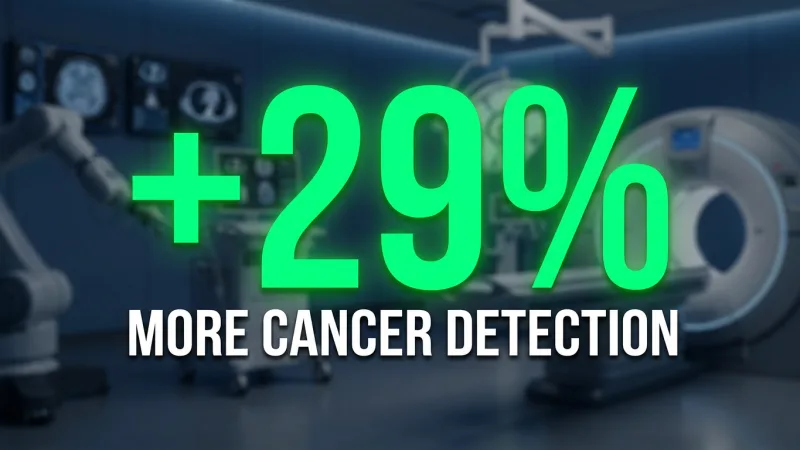
  • In a landmark breast screening trial, adding AI raised cancer detection by 29 percent with no increase in recalls or false positives, while cutting reading workload by nearly half.

  • Half of screen-detected colorectal cancers are stage 1, which raises the case for organ preservation and for targeted imaging such as FAPI-PET to find small tumor volumes.

  • Roughly 75 percent of FDA-approved AI tools are in imaging, yet only 5 percent of hospitals have deployed them, and the barriers are mostly organizational.

  • Her COMPASS AI project, tied to the EU Apply AI strategy, is building the guidelines and network to move validated tools from research into practice.
Early Detection and Prevention Intervention for Colorectal Cancer 18:58

Early Detection and Prevention Intervention for Colorectal Cancer

Geerard L. Beets, Regina Beets-Tan

Colorectal cancer takes close to a million lives a year, and it is one of the most preventable cancers we treat. Professors Regina Beets-Tan and Gerard Beets explain why screening works less...

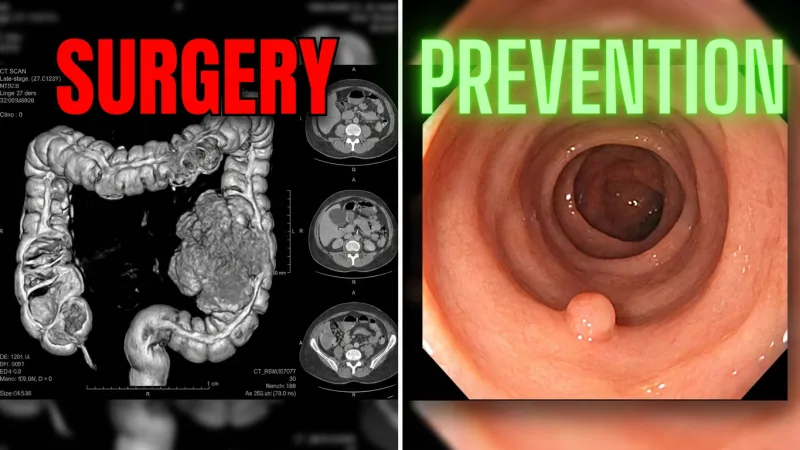
Colorectal cancer takes close to a million lives a year, and it is one of the most preventable cancers we treat. Professors Regina Beets-Tan and Gerard Beets explain why screening works less through early detection than through prevention, by finding and removing the polyps before they ever become cancer.

The talk pairs the radiologist's view with the surgeon's. Professor Beets-Tan sets out where imaging helps and where it does not, including a candid assessment of CT staging. Professor Beets then walks through the Netherlands screening program as a working model of what population screening actually demands, and what it delivers once it matures.

Key points for clinicians:

  • The adenoma-to-carcinoma sequence takes roughly 20 years, which opens a long window to identify and remove precursor lesions.

  • The most cost-effective approach is a FIT test followed by colonoscopy, saving lives through prevention first and early detection second.

  • For staging, agreement between CT and histology for T and N stage was no better than a coin toss, which points toward new biomarkers and targeted imaging such as FAPI-PET.

  • The Dutch program took about 10 years to build and now reaches 70 to 76 percent uptake, with half of screen-detected cancers found at stage 1 and an earlier-than-expected drop in mortality.

  • Roughly 40 percent of colorectal cancers in the Netherlands now avoid major surgery through local excision and watch-and-wait, though the full return on screening takes a 10 to 20 year horizon.

Sponsors