 15:48
15:48
Prevention Interventions and Screening of Gastric Cancer
Felipe Coimbra
Almost a million people are diagnosed with gastric cancer each year, and outside Korea and Japan roughly 90 percent arrive at stage 3 or 4. Dr. Felipe José Coimbra makes the case that findin...
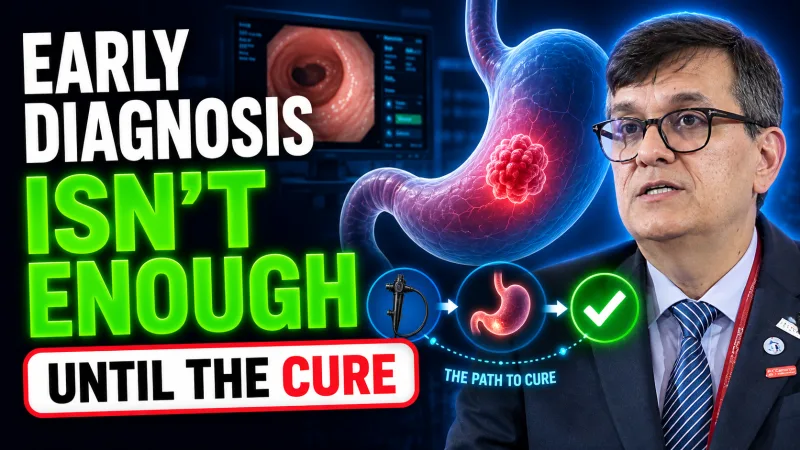
Almost a million people are diagnosed with gastric cancer each year, and outside Korea and Japan roughly 90 percent arrive at stage 3 or 4. Dr. Felipe José Coimbra makes the case that finding these cancers earlier is not enough on its own. A diagnosis is not truly early, he argues, until the patient has been carried all the way to curative treatment.
Dr. Coimbra maps the full prevention window for gastric cancer, from the intestinal-type sequence that runs from H. pylori through chronic gastritis, atrophy, intestinal metaplasia, and dysplasia to invasive disease, and shows where clinicians can intervene before cancer exists. He argues that screening must follow regional risk rather than a single global rule, that H. pylori is the most actionable exposure we have, and that early detection fails whenever the pathway to cure is fragmented. His closing frame is a bridge: the work is not done at the biopsy, it is done at the cure.
Key points for clinicians:
Gastric cancer runs near 1 million cases and roughly 660,000 deaths a year worldwide, and in most countries about 90 percent present at stage 3 or 4, with Korea and Japan the exceptions where organized screening shifts stage earlier.
H. pylori is the most actionable carcinogenic exposure in gastric cancer. Eradication can lower incidence by about 46 percent and mortality by about 40 percent, and reduces metachronous cancer, with the greatest effect before irreversible atrophy and intestinal metaplasia set in.
Screening should follow regional risk. Organized population screening is worthwhile in high-incidence regions like East Asia, while low-incidence settings such as Brazil and North America should target high-risk subgroups only: ancestry or immigration risk, proven familial genetics, H. pylori, and premalignant mucosa.
Endoscopy quality is not optional. Preparation, careful visualization, systematic mapping, and photo documentation are what make a small lesion visible, and pathology must trigger the next step by staging premalignant lesions, not just naming a cancer.
The economic argument favors early disease. Treating one patient at stage 4 costs about what it would take to treat 10 to 15 patients caught early, which is what makes a prevention and early-detection system sustainable.
Innovation should strengthen the pathway, not just the scan. AI risk models, biomarkers, enhanced endoscopy, volatile-compound breath testing, and gastric fluid DNA are promising, but should be adopted only where accuracy, interval, access, and linkage to treatment all hold.